
The saga of Indian hockey is not limited to the achievements of its male players alone. The Indian women’s hockey team has carved a distinct identity for itself in the international sporting arena through sheer struggle, hard work, talent, and stellar performances. Despite limited resources, financial challenges, and various social barriers, Indian women players have consistently given tough competition to some of the world’s most formidable teams.
There was a time when women’s hockey did not receive much attention in India, but today, the Indian women’s team has established a strong presence in international competitions. Players like Rani Rampal, Savita Punia, Vandana Katariya, Deepika, Gurjit Kaur, and many others have played a pivotal role in elevating Indian women’s hockey to new heights.
1980 Moscow Olympics: A Historic Beginning to the Olympic Journey
The Indian women’s hockey team made its Olympic debut at the 1980 Moscow Games—a significant milestone in the history of Indian women’s hockey.
The 1980 Moscow Olympics marked the first time women’s hockey was included in the Games. In their maiden Olympic appearance, the Indian team delivered an impressive performance, securing fourth place. Although they narrowly missed out on a medal, they proved to the world that Indian women are capable of posing a serious challenge in international hockey.
Following this, the Indian women’s team participated in numerous international tournaments, gradually strengthening their standing.
Dominance of Indian Women in the Asian Games
The Indian women’s hockey team has achieved remarkable success at the Asian level. They made history by winning the gold medal at the 1982 Asian Games in New Delhi.
Subsequently, India clinched the gold medal again at the 1998 Asian Games in Bangkok. Furthermore, the team secured a silver medal at the 2018 Asian Games held in Jakarta-Palembang. The Indian women’s team also secured a bronze medal at the 2022 Hangzhou Asian Games. These achievements established a strong identity for India in Asian hockey.
2002 Commonwealth Games: The 'Golden Girls' Make History
The 2002 Manchester Commonwealth Games remain a highly memorable chapter in the history of Indian women’s hockey. Delivering a stellar performance, the Indian team defeated England 3–2 in the final to clinch the gold medal.
This victory ignited enthusiasm for women’s hockey across the entire nation. The challenging journey of women’s hockey and the story inspired by this historic win also gained widespread popularity through the film 'Chak De! India'.
Rani Rampal: A Journey from Struggle to Captaincy
Among the players who have shaped the modern identity of Indian women’s hockey, Rani Rampal stands out as a prominent figure. Hailing from Shahabad Markanda in Haryana, Rani rose from very humble beginnings to carve a niche for herself in international hockey.
She earned a spot in the Indian team at a young age. Driven by her blistering speed, exceptional goal-scoring ability, and leadership skills, she became a key player for the team.
Rani Rampal represented India at the 2016 Rio Olympics and the 2020 Tokyo Olympics. Under her captaincy, the Indian women’s team delivered a historic performance at the Tokyo Olympics, reaching the Olympic semi-finals for the first time.
In 2020, Rani was honored with the country’s prestigious Rajiv Gandhi Khel Ratna Award (now known as the Major Dhyan Chand Khel Ratna). She became the first female Indian hockey player to receive this honor.
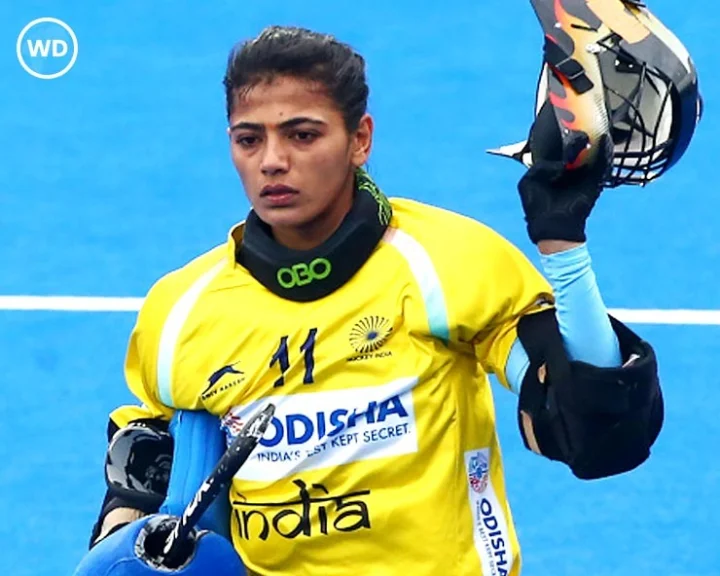
Savita Punia: A Formidable Wall in the Indian Goalpost
Goalkeeper Savita Punia has played a vital role in the success of Indian women’s hockey. Hailing from Sirsa in Haryana, Savita is often referred to as 'The Great Wall of India' due to her exceptional goalkeeping.
In numerous crucial matches, she has rescued the Indian team from difficult situations with her brilliant saves. Her performance at the Tokyo Olympics was also truly memorable. Savita also led the Indian team as captain and played a pivotal role in nurturing young players. Her hard work and consistency serve as an inspiration for Indian women’s hockey.
Vandana Katariya: The First Indian Woman to Score a Hat-trick at the Olympics
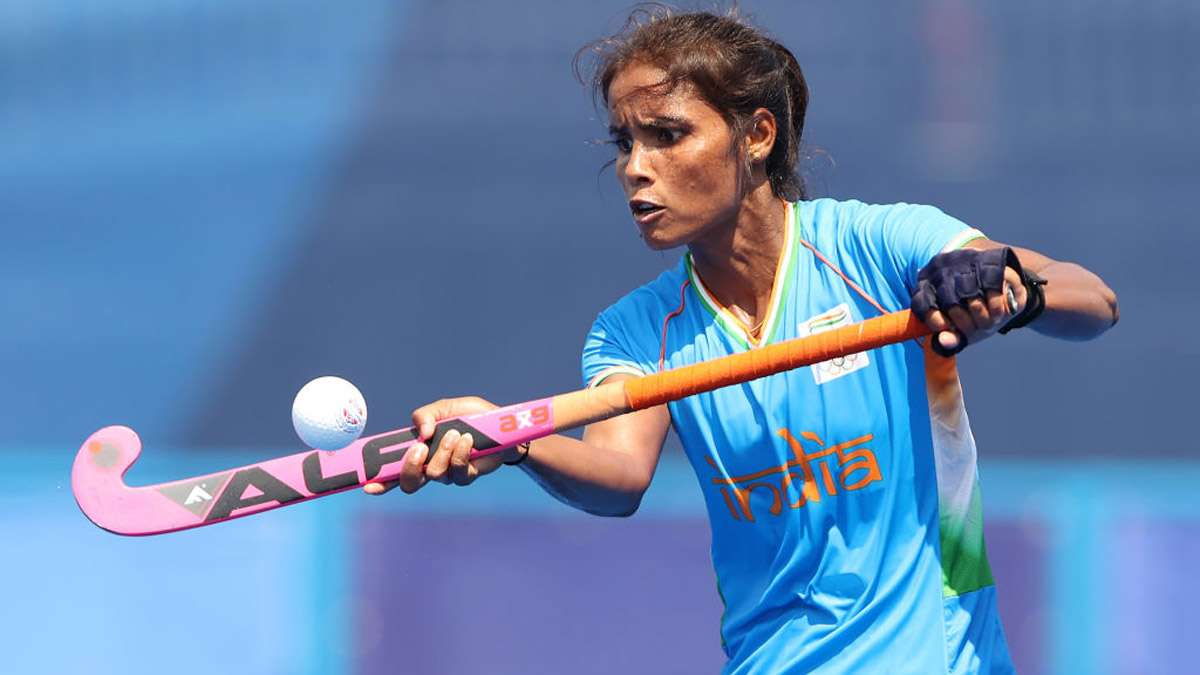
Vandana Katariya is another major star of Indian women’s hockey. She earned international recognition for her aggressive style of play and her ability to score goals.
In a match against South Africa at the Tokyo 2020 Olympics, Vandana scored a spectacular hat-trick. She became the first Indian female hockey player to achieve a hat-trick at the Olympics.
This achievement added a new chapter to the history of Indian sports. Vandana proved that Indian female athletes are capable of delivering outstanding performances in high-stakes matches against the world’s best teams.
Tokyo Olympics 2020: Making History by Reaching Fourth Place
The Tokyo Olympics 2020 stands as one of the most memorable tournaments in the history of Indian women’s hockey. The Indian team delivered an extraordinary performance during these Games, which were held in 2021.
After facing initial defeats in the group stage, the team made a spectacular comeback. India defeated Australia 1-0 in the quarter-finals to reach the Olympic women’s hockey semi-finals for the first time.
This marked one of the greatest achievements in the history of Indian women’s hockey.
Following a loss to Argentina in the semi-finals, the Indian team was defeated 3-4 by Great Britain in the bronze medal match, ultimately finishing in fourth place.
Although India did not win a medal, the players' performance won the hearts of the entire nation. The team proved that Indian women’s hockey is now capable of challenging the world’s top teams.
Achievements in the Women’s Hockey World Cup and Asian Competitions
The Indian women’s team has also showcased its talent multiple times in the Hockey World Cup. The first Women’s Hockey World Cup was held in 1974, and by participating in it, India marked its presence on the international stage.
Furthermore, India has achieved remarkable success in the Women’s Asia Cup, winning the title in 2004 and 2017.
In 2016, the Indian women’s team clinched the Asian Champions Trophy title for the first time. They went on to win the title again in 2018 and 2023.
These successes have further strengthened the standing of Indian women’s hockey at the Asian level.
A New Generation of Players Elevating the Pride of Indian Hockey
A new generation of players is also playing a pivotal role in advancing Indian women’s hockey. Players such as Deepika, Gurjit Kaur, Salima Tete, Neha Goyal, Navneet Kaur, Lalremsiami, and Udita have showcased their talent on the international stage.
These players have infused new energy and self-confidence into the Indian team. In modern hockey, the importance of speed, fitness, strategy, and technique has grown, and Indian women players are consistently improving in all these areas.
The Future of Indian Women’s Hockey
Today, efforts are underway to promote women’s hockey in India through the expansion of sports academies, training centers, and national-level competitions. A large number of talented players are emerging from states like Haryana, Odisha, Jharkhand, and Punjab.
Indian hockey has received a significant boost through the collaboration between the Government of Odisha and Hockey India. Enhanced training facilities, international exposure, and the use of modern technology are consistently elevating the standard of the women’s team.
The current challenge for Indian women’s hockey is to win an Olympic medal and a World Cup title. The team’s performance at the Tokyo Olympics serves as proof that India’s women possess the full potential to defeat the best teams in the world.
Indian Women Have Transformed the Landscape of Women’s Hockey
The story of Indian women’s hockey is one of struggle, courage, and self-confidence. The journey, which began at the 1980 Moscow Olympics, has now reached the grand stage of international hockey.
Rani Rampal paved the path from struggle to success; Savita Punia anchored the team by standing as a formidable wall at the goalpost; and Vandana Katariya brought glory to India with her goals.
By securing fourth place at the Tokyo Olympics, the Indian team instilled the belief that the future of Indian women’s hockey is bright.


