
Hockey is one of the oldest and most popular team sports in the world. The tradition of playing with a stick and a ball is believed to date back thousands of years, with early variations appearing across various civilizations. In ancient Egypt, Greece, Persia, and other regions, people engaged in games that involved using a wooden stick to strike a ball. Over time, these games evolved, eventually giving rise to modern hockey.
Today, hockey is more than just a sport; it has become a symbol of passion, skill, speed, discipline, and team spirit for millions of sports enthusiasts worldwide. From the Olympic Games to the World Cup and various continental championships, hockey has carved out a distinct identity for itself.
Glimpses of Hockey in Ancient Civilizations
To understand the story of hockey, one must look back into the pages of history. Many games involving a stick and a ball were prevalent in ancient civilizations. Certain ancient Egyptian artifacts depict players using curved sticks alongside objects resembling a ball. Evidence of a tradition involving the use of a stick to play with a ball can also be found in ancient Greece.
While it would be inaccurate to label these ancient pastimes as "modern hockey," they are considered part of a long-standing tradition of stick-and-ball games.
In medieval Europe, too, various regions featured games where participants used wooden sticks to propel a ball. Although the rules for these games were not uniform, they exhibited some of the fundamental characteristics found in modern hockey.
The Emergence of Modern Hockey in England
England played a pivotal role in the development of modern field hockey. During the 19th century, schools and clubs across Britain began to formalize and standardize the rules of the game. Efforts were made to bring the game—played in various locations—under a unified set of rules.
In 1876, an organization was formed in England to systematize the rules of hockey. Subsequently, the Hockey Association was established in 1886. This gave the sport an organized identity and led to the development of structured competitions.
Through the British military, traders, and educational institutions, hockey spread to many countries around the world, including India. Gradually, the sport began to gain international popularity.
The historic journey to the Olympics
Hockey was first included in the 1908 London Olympics. However, its presence in the early Olympic Games was not consistent; it was removed for a period following the 1920 Antwerp Olympics.
In 1924, the International Hockey Federation (FIH) was established. From the 1928 Amsterdam Olympics onwards, men’s field hockey became a permanent fixture in the Olympic program.
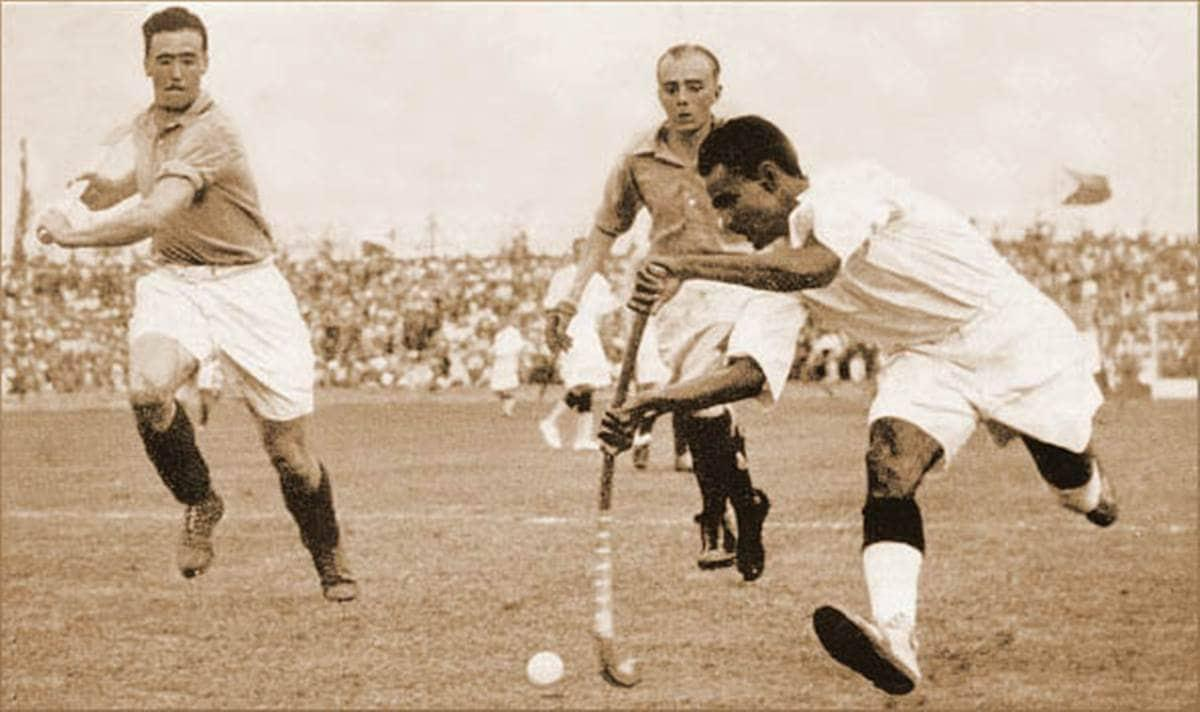
Women’s hockey was introduced to the Olympic Games for the first time at the 1980 Moscow Olympics. Thus, hockey’s journey evolved from a regional pastime to a sport featured on the world’s grandest sporting stage.
- 1861: The founding of the Blackheath Hockey Club in England is considered one of the earliest instances of an organized hockey club.
- 1875: Efforts were initiated to systematize the rules of hockey.
- 1886: The Hockey Association was established in England, playing a crucial role in standardizing the rules of the game.
- 1908: Men’s hockey was included in the Olympic Games for the first time, in London. Significant Dates in Hockey History
Year
Historical Event : Circa 2000 BCE
Ancient evidence of stick-and-ball games in Egypt
1876 – Formal rules for hockey established in England
1886 – Reorganization of the Hockey Association
1908 – Men’s hockey introduced at the London Olympics
1924 – International Hockey Federation (FIH) founded
1928 – Men’s hockey becomes a regular Olympic sport, starting with the Amsterdam Olympics
1971 – First Men’s Hockey World Cup
1974 – First Women’s Hockey World Cup
1976 – Introduction of artificial turf in Olympic hockey
1980 – Women’s hockey introduced at the Moscow Olympics
2014 – Hockey5s introduced at the Youth Olympics


