
The ongoing cricket matches between India and West Indies have once again proven that in modern cricket, it's not enough to simply score big; defending targets under pressure and understanding the opposition's strategies are equally important. The Indian team showcased its batting strength by winning the ODI series 2-1, while the ups and downs between the two teams in the T20Is made the series exciting.
While this series is an opportunity for the Indian team to showcase its batting depth and the potential of its young players, maintaining consistency in its bowling also poses a challenge. On the other hand, West Indies have demonstrated their ability to achieve any large target with aggressive batting.
ODI Series: India's Strength: Batting, Weakness: Defending Targets-In the three-match ODI series, the Indian team won the first two matches to clinch the series. The eight-wicket victory in the first match and the second match by eight wickets highlighted the strength of the Indian batting. In particular, the successful chase of 406 runs in the second ODI was a major achievement for Indian cricket.
Shubman Gill's double century and Rohit Sharma's century demonstrated that Indian batsmen can balance restraint and aggression even under the pressure of a large target. The formidable partnership between the two nearly eliminated the West Indies bowlers from the contest.
But the situation changed in the third ODI. India set a high total of 351 runs, yet West Indies achieved the target thanks to Shai Hope's brilliant unbeaten 162. This victory was a significant boost to the Caribbean team's confidence, but also led to serious scrutiny of the Indian bowling.
When an opposition achieves a target of over 350 runs, questions arise not only about the bowlers' performance, but also about fielding, bowling variety, death-over strategy, and captaincy decisions under pressure. The Indian team must understand that not every match can be won based on a high score.
T20 Cricket: Even Small Mistakes Can Cost a Threat in an Age of Aggression - The T20 series between India and the West Indies has become increasingly competitive. India took a 2-1 lead after the first three matches, but West Indies' victory in the second T20I sent a clear message to the Indian team that no target can be considered safe in T20 cricket.
Despite a high score of 249, India lost. Explosive batting by Shai Hope and Sherfane Rutherford thwarted the Indian bowlers' plans. In this match, West Indies not only scored runs but also exerted mental pressure on the Indian team.
Following this, India bounced back in the third T20I, scoring 223 runs and defeating West Indies by 14 runs. Abhishek Sharma's explosive innings bolstered the Indian batting, while Arshdeep Singh's three wickets played a crucial role in the victory.
This match demonstrated that when the Indian team maintains discipline in both batting and bowling, it is difficult to stop them. However, sustained success in T20 cricket requires controlling the run rate and
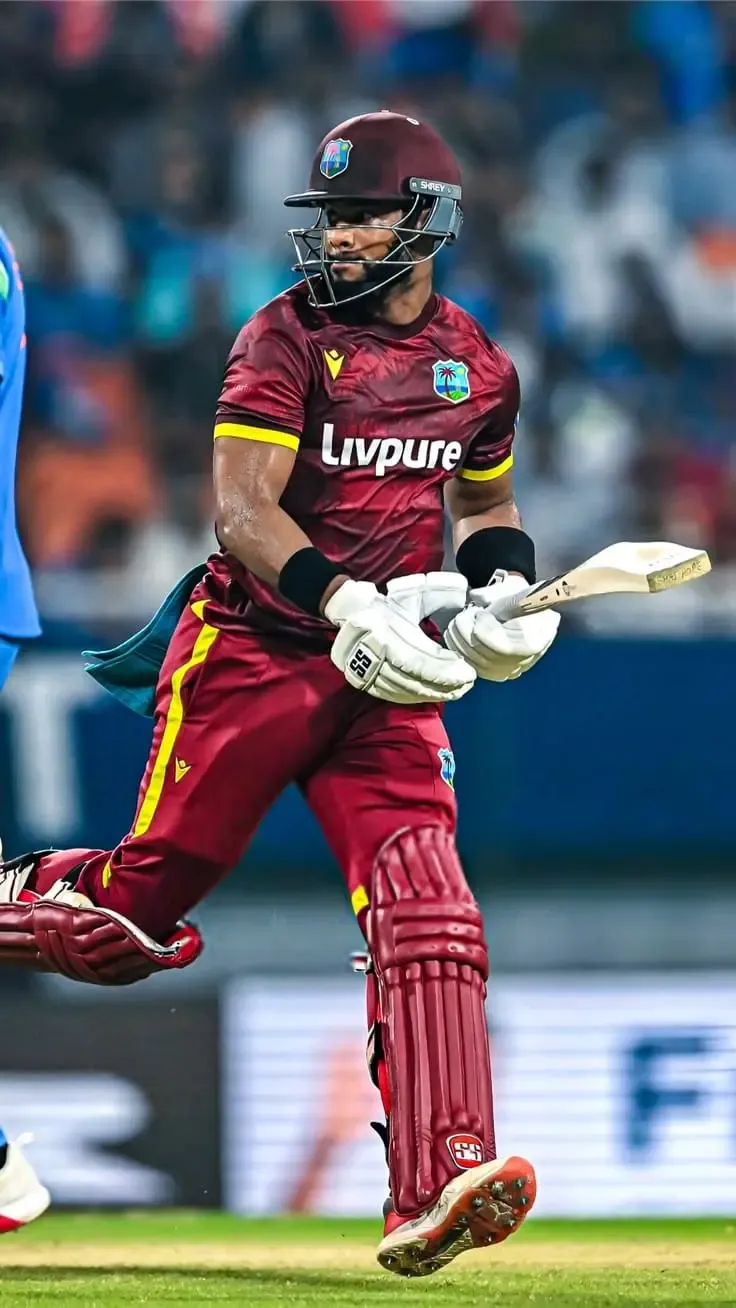
breaking partnerships, rather than relying solely on wicket-taking bowlers.
Shubman Gill and Shai Hope: Two Different Styles, Similar Aggression-The performances of Shubman Gill and Shai Hope have been a topic of particular discussion in this series. Gill showcased the potential of the Indian batting by scoring big in ODIs, while Hope demonstrated his ability to rescue his team from difficult situations in both ODI and T20 formats. Gill's batting displayed technique, an understanding of how to build an innings, and the patience to reach a big score. Hope, on the other hand, demonstrated that in modern cricket, a batsman must be able to adapt his style to the circumstances by adopting an aggressive approach when needed.


